

How the 2026 Lexus TX 500h F SPORT Performance Pairs 366 hp with 8.6 L/100 km
July 17 2026,
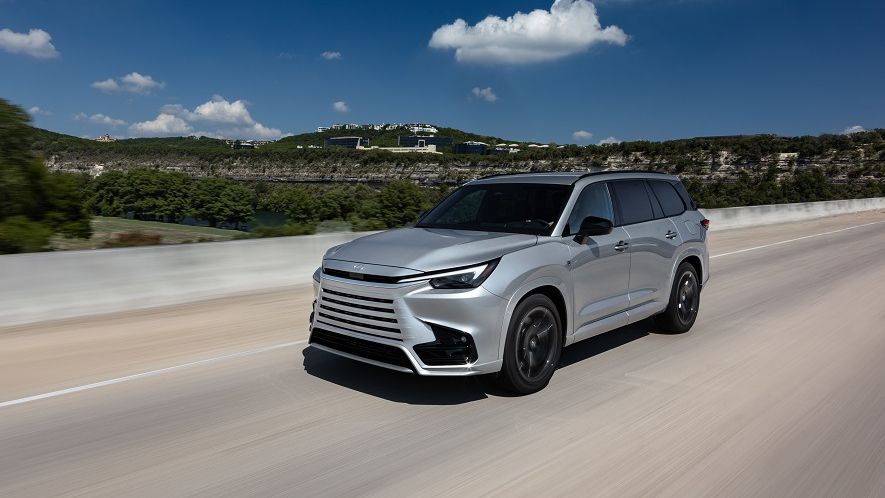
For British Columbia families who want to actually enjoy the drive, not just complete it, the 2026 Lexus TX 500h F SPORT Performance makes a pointed argument: 366 horsepower and 8.6 L/100 km combined fuel economy from the same 2.4-litre engine architecture that powers the gas-only TX 350.
This article breaks down how that hybrid system works, what it changes about the experience behind the wheel, and which of the two available configurations fits your situation best.
The TX 500h Hybrid System: What It Is
The TX 500h F SPORT Performance is built around a parallel hybrid system. Its foundation is a 2.4-litre turbocharged inline-4 engine paired with electric motors, channelling combined output through a 6-speed automatic transmission with sequential shift mode. The Lexus DIRECT4 all-wheel-drive system manages how that power reaches the road, adjusting torque distribution between the front and rear axles continuously based on wheel speed, acceleration, and steering angle.
Placing the TX 500h beside the gas-only TX 350 shows how much the hybrid architecture changes the numbers:
|
Spec |
TX 500h F SPORT Performance |
TX 350 |
|
Engine |
2.4L turbo I4 + hybrid |
2.4L turbo I4 |
|
System horsepower |
366 hp |
275 hp |
|
Torque |
409 lb-ft |
317 lb-ft |
|
Fuel economy (combined) |
8.6 L/100 km |
11.5 L/100 km |
|
Towing capacity |
5,000 lbs (2,268 kg) |
5,000 lbs (2,268 kg) |
The 91 hp and 92 lb-ft advantage over the TX 350 comes without a towing penalty. Both platforms share the same 5,000 lb (2,268 kg) rating.
How the Hybrid System Works
In a parallel hybrid layout, the gas engine and electric motors can work together or independently. At low speeds and during light acceleration, the system draws on electric power; during highway cruising or hard acceleration, the turbocharged engine takes a more prominent role. The electric motors also recover kinetic energy under braking, converting it back into stored energy rather than losing it as heat.
The DIRECT4 system adds a layer beyond typical AWD. Rather than splitting torque on a fixed schedule, it calculates the ideal front-to-rear distribution at any moment. During cornering, it can shift torque rearward to help the vehicle rotate more cleanly; during acceleration on wet pavement, it adjusts to keep traction consistent.
Drive Mode Select puts the driver in control of the system’s character: Normal for everyday balance, Eco to prioritize fuel savings, and Sport to shorten throttle response and firm the feel. Adaptive Variable Suspension (AVS) is standard, so the Sport mode shift isn’t just in the powertrain; the suspension responds accordingly.
Why It Matters in Real Driving
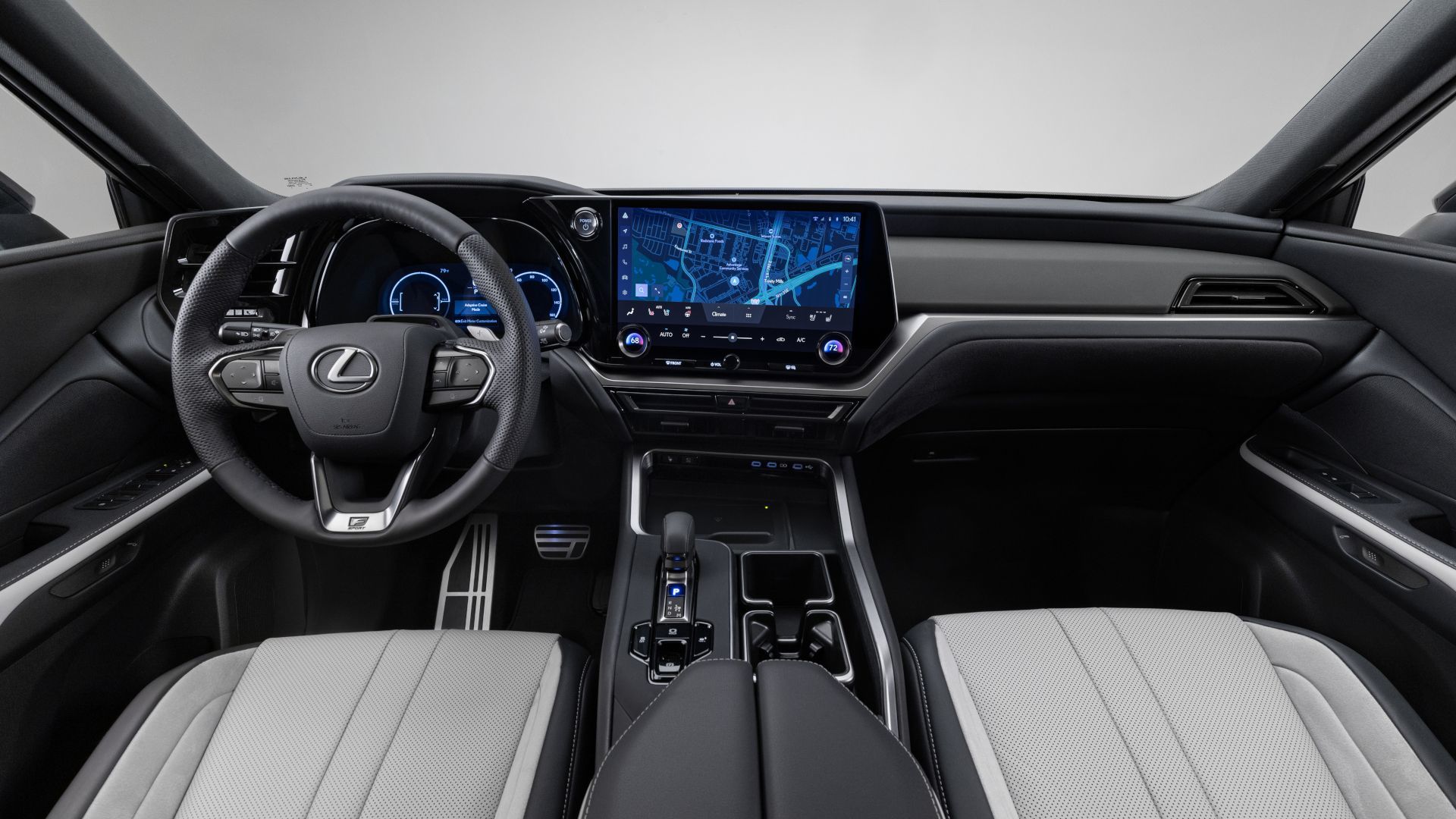
The 8.6 L/100 km combined rating sits 2.9 L/100 km below the TX 350’s 11.5 L/100 km. That gap is most noticeable in urban traffic, where hybrid systems recover energy during deceleration rather than burning fuel at idle. For a three-row SUV carrying a full family load, those savings accumulate over time.
Hybrid torque also behaves differently from a gas engine alone. Electric motors deliver their output at near-zero RPM, so the TX 500h responds immediately from a standstill without waiting to build through the rev range. The 409 lb-ft figure is felt from the first push of the accelerator, which matters during highway merging or overtaking.
Towing capability remains unchanged from the TX 350, at 5,000 lbs (2,268 kg). A Class IV towing receiver hitch is available as an option on both the F SPORT Performance 2 and F SPORT Performance 3 configurations, so those pulling a boat or trailer on BC weekends are not penalized for choosing the hybrid.
Who Benefits Most from the TX 500h F SPORT Performance
The TX 500h F SPORT Performance comes in two configurations, and the gap between them is worth understanding before you choose.
The F SPORT Performance 2 is the entry point to the hybrid TX. Standard features include 22-inch F SPORT alloy wheels, the F SPORT front grille and bumpers, heated and ventilated first- and second-row seats, a 12-speaker audio system, the 14-inch Lexus Interface touchscreen with wireless Apple CarPlay and Android Auto, 3-zone automatic climate control, a panoramic moonroof, and power folding third-row seats.
Second-row captain seats are standard, giving the cabin a 6-passenger layout. Cargo capacity runs 572 L behind the third row, expands to 1,625 L with the third row folded, and reaches 2,747 L with both rear rows stowed.
The F SPORT Performance 3 adds the features that shift this from a capable family vehicle into a fully loaded one: a 21-speaker Mark Levinson premium audio system, head-up display, 1,500W inverter, Traffic Jam Assist, Panoramic View Monitor, Lane Change Assist, Front Cross Traffic Alert, Advanced Park, Driver Monitor Camera, and Adaptive High-Beam System. For a family that wants the complete technology suite, the step to Performance 3 is where it lives.
Both trims carry USB ports for all three rows, Trail Mode, and Lexus Safety System+ 3.0 covering pre-collision system, lane-keep assist, and radar cruise control as standard.
The TX 500h F SPORT Performance suits the driver who wants the power and efficiency advantage simultaneously, is outfitting a 6-person household, and values the F SPORT character through the interior trim and suspension tuning. Buyers who need a seven-passenger layout or prefer the gas powertrain have options within the broader TX 350 lineup.
Find Your TX 500h F SPORT Performance at Regency Lexus
The 2026 Lexus TX 500h F SPORT Performance delivers 366 hp and 409 lb-ft of torque from a 2.4-litre turbo hybrid, returns 8.6 L/100 km combined, and tows 5,000 lbs (2,268 kg), all in a 6-passenger three-row SUV with a fully developed F SPORT interior.
Visit Regency Lexus in Vancouver to walk through both F SPORT Performance configurations side by side. Schedule a test drive to feel how the DIRECT4 system and hybrid torque respond in the conditions you actually drive.